

Craps maintains a reputation as one of casino gambling’s best odds games. Players cite the 1.4% house edge on pass line bets as evidence that craps differs fundamentally from slot machines. But this comparison obscures a critical truth: even favorable odds still favor the house. The psychological appeal of craps lies not in mathematical advantage but in how its complexity creates the illusion of control. Understanding craps requires separating myth from reality—and examining why even educated players make suboptimal decisions.
Craps descends from the English game Hazard, simplified and popularized in New Orleans during the 1800s. Modern craps evolved through that lineage, becoming the second-most popular table game after blackjack. This historical context matters because familiarity breeds comfort, and comfort can mask mathematical reality.
The pass line bet carries a 1.4% house edge, compared to roulette’s 2.7%. This appears meaningful: a 50% reduction in the house advantage. But this comparison misleads players into believing the game is mathematically neutral territory. It’s not. At 1.4%, the house extracts approximately €14 per €1,000 wagered over extended play. This is still money flowing systematically toward the casino.
The critical misconception involves confusing “low house edge” with “favorable conditions for the player.” Low house edge means the casino’s advantage is modest, not absent. Over thousands of rolls, this modest advantage compounds. A craps player cannot outperform the mathematical expectation through betting strategy. The house edge persists regardless of how you structure your bets.
What craps actually offers is extended gameplay duration for moderate bankroll investment. Pass line betting at table minimum stakes can provide entertainment for hours at relatively low cost. This is not a path to profit; it’s the cost structure of entertainment. Framing it as mathematical advantage—even favorable mathematical advantage—creates false expectations.
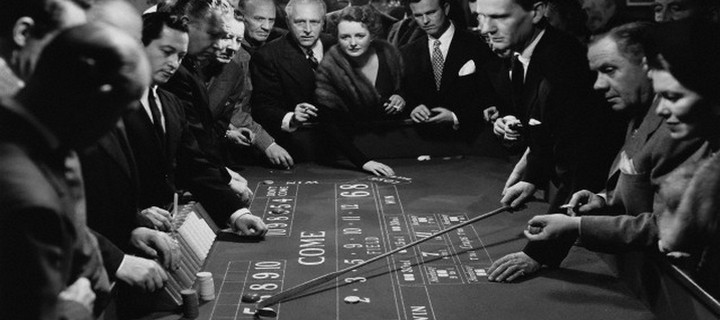
Craps instruction frequently includes guidance on dice control: how to set the dice, grip them, and release them to reduce randomization. The appeal is obvious—if you control the dice, you control outcomes. But this reasoning confuses procedure with causation.
Dice control claims rest on a specific argument: skilled shooters can reduce the frequency of sevens while increasing point number frequency, thereby shifting odds in their favor. The theoretical mechanism involves minimizing die rotations during flight, maintaining their relationship to each other, and thereby introducing pattern into what should be random.
The practical problems are immediate and severe. First, casino dice have specifications designed to ensure randomness: precise dimensions, centered weight distribution, and required tumbling against the back wall. These specifications directly counteract any advantage from reduced rotations. Second, even expert dice control practitioners produce minimal measurable variance from true randomness—insufficient to overcome the house edge. Third, the psychological investment in dice control creates selection bias: shooters remember the few times their technique appeared effective and forget the many times it failed.
Behavioral economics identifies this as the “illusion of control.” Humans have cognitive needs to feel they influence outcomes. Dice setting satisfies this need psychologically without changing mathematical reality. You feel more engaged because you’re executing technique. But the dice don’t “know” how you set them. Randomness doesn’t care about procedure.
Casinos permit and even encourage dice control discussion precisely because it doesn’t work. If controlled dice genuinely shifted odds, casinos would prohibit them. The fact that casinos allow and teach dice control reveals their confidence: the technique provides no actual advantage.
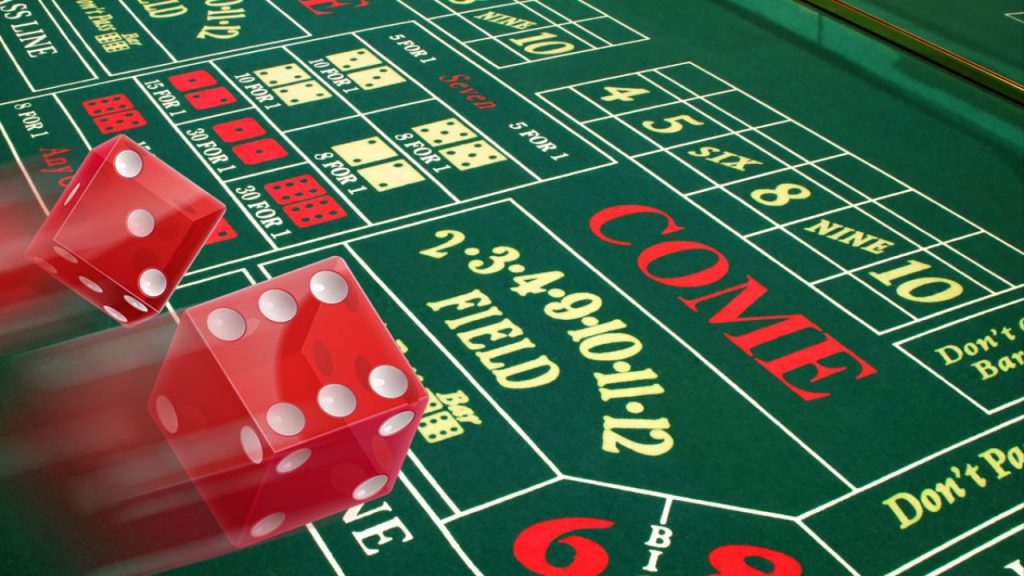
While dice control is illusory, betting structure does matter—not for changing odds but for managing bankroll exposure. Rational craps strategy focuses on maximizing expected value within your budget constraints.
The “Pass and Come with Odds” strategy exemplifies this approach. You place a minimal pass bet, then back it with substantial odds bet (which carries no house edge). This concentrates your total wager in the no-edge portion of the bet structure. You win less frequently than you lose (probability favors the house), but when you win, odds payouts compensate proportionally.
The “Don’t Pass and Laying Odds” strategy reverses this: you’re betting against the shooter, and odds payouts shift accordingly. This strategy appeals to probability-conscious players, though it requires tolerating the psychological discomfort of rooting against the shooter.
“Place Betting 6 and 8” occupies the middle ground. The 1.52% house edge on 6 and 8 (higher than pass line, lower than most proposition bets) reflects these numbers’ frequency. Players who prefer simpler betting structures might use this strategy despite its higher edge cost.
These strategies don’t improve your odds. The house retains its mathematical edge regardless. What they do is optimize your bankroll allocation toward bets with lower percentage extraction, thereby extending your play duration for a given budget.
Craps generates more superstitious belief than most casino games. Players avoid certain numbers, believe in hot/cold streaks, and develop elaborate rituals around dice handling. These beliefs concentrate around craps specifically because the game’s structure supports superstitious thinking.
The come-out roll creates a natural focusing point. Players experience shared outcomes: the shooter’s decisions affect everyone at the table. When you win together, causation feels obvious: the shooter made good dice. When you lose together, explanation is immediate: the shooter broke the rhythm. This shared narrative reinforces superstitious belief.
Additionally, craps offers dozens of bet types. This variety creates apparent strategy richness. Some bets are “hot” (currently paying frequently), others “cold” (not paying). Players develop narratives explaining current patterns: “6 and 8 are hot right now, so place them.” But hot/cold patterns reflect random variation, not genuine conditions. Small sample sizes within longer randomness always show clustering. This clustering, however, doesn’t predict future outcomes.
Behavioral economists call this the “hot hand fallacy.” The belief that past success predicts future success in random systems. Craps’s structure—multiple numbers, multiple bet types, multiple outcomes—maximizes opportunities for the hot hand fallacy to emerge. Superstition flourishes in this environment.
Craps’s actual value proposition is straightforward: you pay approximately €14 per €1,000 wagered for the entertainment of gambling with others at a social table game. This is a legitimate consumer choice. But it requires honest assessment: you are paying for entertainment, not pursuing profit.
The illusion of control—through dice technique, superstitious ritual, or betting strategy—obscures this reality. When you believe you’re using strategy to improve odds, you’re more comfortable continuing play longer. Extended play duration increases total expenditure. What appeared to be strategic advantage becomes extended loss through optimistic framing.
Rational craps play requires accepting a few truths: (1) You cannot change the mathematical edge through technique or betting strategy. (2) Every roll is independent; hot/cold streaks are statistical illusions. (3) Dice control is ineffective; your ritual doesn’t influence outcomes. (4) The game’s value lies in social experience and entertainment, not in profit potential.
Within these constraints, you can optimize: use betting strategies that minimize edge percentages, maintain strict budgets, treat losses as entertainment costs rather than problems to overcome, and avoid the psychological trap of believing you can outperform mathematical expectation.
Craps offers better odds than many casino games. But “better than most casinos” is not the same as “favorable to players.” The 1.4% house edge is still an edge. Over extended play, it extracts predictable value from players.
The game’s appeal lies elsewhere: in the social aspect of table play, in the excitement of shared outcomes, and in the narrative structure of extended games. These are legitimate reasons to gamble. But don’t disguise entertainment spending as investment or strategy. Dice control, betting sequence management, and hot number selection don’t change the underlying mathematics.
Play craps for enjoyment. Manage your bankroll with clear limits. Understand the actual house edge. But abandon the illusion that technique or strategy can overcome mathematical reality. The house’s advantage persists regardless of how skillfully you roll.