

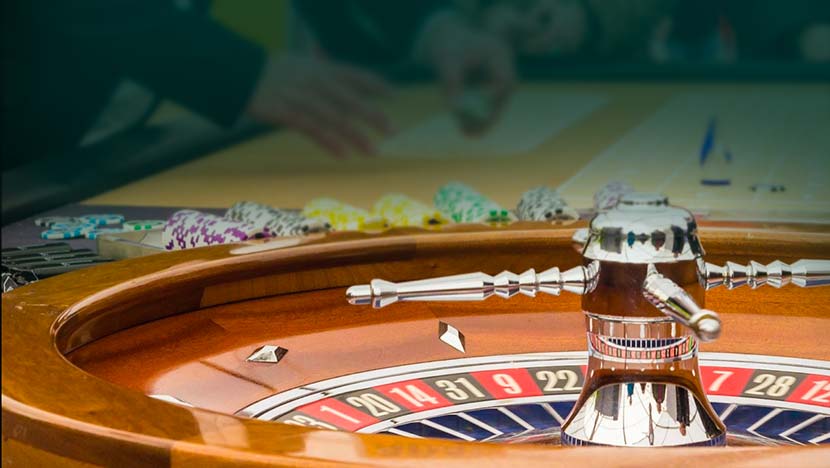
People are drawn to betting systems for a seductive reason: they appear to transform random outcomes into controlled results. The Parlay system and the Labouchère method—two of the most celebrated betting strategies in roulette—represent humanity’s ongoing attempt to overcome randomness through structure. But do these systems actually improve odds, or do they simply make uncertainty feel more manageable? The answer reveals something profound about how we rationalize risk.
The Parlay system is fundamentally a progressive betting strategy where stakes increase after wins. It operates on a simple principle: establish a predetermined sequence of bet sizes (such as 1-2-2-4), bet only on simple chances (even money bets like red/black or odd/even), and follow the sequence as you win. When you lose, you regress one step in the sequence. The goal is to complete the entire sequence and secure profits before randomness catches you.
The psychological appeal is immediate. Unlike flat betting, which feels passive and monotonous, the Parlay system creates a narrative of momentum. Each win moves you forward on your predetermined path. This forward movement satisfies a deep human need: the sense of progress toward a goal. Your brain associates progression with momentum, and momentum with inevitable success. But this narrative masks a statistical reality.
The mathematics of the Parlay system is transparent: it doesn’t change the house edge. Roulette maintains its built-in advantage regardless of how you structure your bets. Each spin remains independent. The probability of winning or losing on the next spin is unaffected by previous results. What the Parlay system actually does is manage psychological experience, not mathematical odds.
Consider the practical example: you bet €10 on a simple chance and win, receiving €20. You now bet €20 (your original stake plus winnings) on the next spin. If you win again, you have €40 and move further along your sequence. The system creates a satisfying experience where wins compound and the sequence provides clear structure.
But this structure has a cost. The Parlay system amplifies volatility. As you move through the sequence, your bets grow larger. A loss at a high position in the sequence erases multiple previous gains. You lose more relative to what you’ve won. The system doesn’t eliminate bad luck; it concentrates exposure to it. When the inevitable losing streak arrives—and in randomness, it will—the damage is proportional to how far you’ve progressed.
Additionally, the system creates an illusion of control. By following a predetermined path, you feel you’re implementing strategy rather than relying on chance. This illusion reduces the psychological discomfort of gambling. But reduced discomfort doesn’t mean reduced risk. It means you’re comfortable taking risks that mathematics suggests shouldn’t comfort you.
The Labouchère system (also called the scratch-off progression) operates differently but pursues the same underlying goal: transform randomness into control through mathematical structure. Developed by a British politician and enthusiast, it has achieved significant cultural status in gambling communities. The system asks: what if we work backward from our profit goal?
The process begins with deciding your target profit. Let’s say you want to win €21. You decompose this into a number sequence that adds up to the target: 1-2-3-4-5-6. Your first bet is the sum of the leftmost and rightmost numbers (1+6=7 euros). If you win, you cross out both numbers and repeat with the remaining sequence (2-3-4-5). Your next bet would be 2+5=7 euros. You continue until all numbers are crossed out, at which point you’ve achieved your target profit.
The Labouchère method appeals to a different psychological mechanism than the Parlay system. While Parlay creates momentum (forward progress), Labouchère creates logical inevitability. The system appears mathematically elegant: if you work backward from a goal with this methodology, aren’t you somehow guaranteed to reach it?
The answer requires understanding a subtle distinction. Labouchère doesn’t guarantee profit; it guarantees that if you win enough hands (with appropriate probability distribution), you’ll achieve your profit goal before losing enough to exceed it. But this is true of any betting system with any structure. The mathematical reality remains: the house edge on roulette persists regardless of your sequence.
What makes Labouchère particularly seductive is that losses create longer sequences, which require you to continue playing longer. The system doesn’t eliminate losses; it converts them into reasons to keep betting. If you lose frequently early on (which you will, given roulette odds), the sequence grows, requiring more bets to complete. More bets means more exposure to the house edge.
Both Parlay and Labouchère systems create the same fundamental psychological shift: they transform passive uncertainty into active strategy. This transformation is powerful psychologically but illusory mathematically.
When you gamble without a system, you feel the randomness acutely. Each spin is presented as a discrete event with unknown outcome. You’re exposed to uncertainty without mediation. This is psychologically uncomfortable because humans have deep needs for control and predictability.
A betting system provides mediation. Instead of asking “will this spin win?”, you ask “am I following my system correctly?” The question shifts from uncertain (randomness) to certain (procedure). You can always follow your sequence correctly. This procedural certainty doesn’t control the outcome, but it controls your experience of the outcome.
This is why betting systems persist despite their mathematical inefficacy. They’re not primarily about improving odds—they’re about managing anxiety. A person using the Parlay system isn’t really believing the system improves odds; they’re using the system to structure their emotional experience of randomness.
Behavioral economics calls this “narrow framing.” By focusing on the specific sequence and your position within it, you narrow your frame of reference. You’re not thinking about the aggregate odds across all your bets; you’re thinking about whether you’re at position 2 or position 3 in your sequence. Narrow framing feels more manageable than broad framing.
Additionally, these systems leverage anchoring. When you establish your sequence (1-2-2-4 or 1-2-3-4-5-6), you anchor your expectations to that sequence. Subsequent decisions are evaluated relative to the anchor. You continue betting because you’ve mentally committed to completing the sequence. Anchoring to the sequence overrides anchoring to house odds.
The systems also exploit sunk cost thinking. After you’ve invested time and emotional energy into a Labouchère sequence or Parlay progression, abandoning it feels like wasting the effort. You’ve “earned” the right to complete it. This sunk cost thinking extends your gambling duration, increasing your exposure to the house edge.
Roulette’s house edge is approximately 2.7% (European roulette) or 5.26% (American roulette). This edge is built into the odds: the payout doesn’t quite match the true probability of your bet winning. Over many spins, this edge extracts value from players.
No betting system changes this edge. Parlay doesn’t change it. Labouchère doesn’t change it. Neither system is proprietary in a way that would alter the mathematical reality of the game. They’re simply different ways of organizing how much you bet on each spin.
Consider what a winning betting system would need to accomplish: it would need to somehow change the probability of landing on red when red is 48.65% likely (in European roulette). Or it would need to change the payout when you win. Neither is possible. The system is external to the game mechanics.
What systems do change is variance. Parlay creates long losing sequences at the cost of concentrated losses in bad outcomes. Labouchère creates longer play duration that increases expected total losses (more spins = more exposure to house edge). These aren’t improvements; they’re different ways of experiencing the same mathematical reality.
This is why behavioral economists note that betting systems are attractive precisely because they’re mathematically futile. If they worked, they would be exploited by professional bettors. The fact that casinos allow these systems (and even discuss them) reveals they don’t threaten the house edge.
The only way to overcome the house edge would be to either (1) change the game rules, (2) gain information about specific outcomes before they’re determined, or (3) find genuine bias in the wheel. None of these is achievable through betting systems. The systems are external to the game; they can’t override game mechanics.
The most insidious aspect of betting systems is how they extend gambling duration. Extended duration means more spins, more interaction with the house edge, and therefore larger aggregate losses.
A person with a fixed budget might otherwise gamble for a certain number of spins and call it done. The Labouchère system, by extending play duration (completing the full sequence), increases the number of spins they participate in. Each additional spin is exposure to a 2.7% edge. Over a thousand spins, that edge compounds significantly.
Parlay systems create similar extended duration through the appeal of “working through the sequence.” A person commits to completing the sequence, not to limiting their number of spins. This distinction matters because spins are the real unit of risk; the sequence is just structure.
Additionally, both systems create psychological attachment to outcomes. You’re not just gambling; you’re executing a strategy. This attachment makes it harder to quit. Walking away while mid-sequence feels like failure. This psychological attachment extends duration beyond what rational risk assessment would suggest.
For casual players with strict budgets, these extended durations might not matter much. But for players without strict limits, systems become mechanisms for gradually increasing exposure. The system feels controlled; therefore, continued play feels reasonable. The mathematical reality is that continued play is exactly what the house edge exploits.
The systems also create asymmetric memory. Wins are remembered in the context of the system (“I completed the sequence!”). Losses are remembered as interruptions to the system (“I was progressing well, but then I lost”). This asymmetric memory makes winning feel deserved and losing feel unlucky. Neither reflects reality; both are just randomness. But the system’s structure makes winning feel like strategy success and losing feel like bad luck. This emotional framing encourages continued play.
Rather than deploying betting systems, rational gambling requires clear-eyed assessment of what you’re doing. You’re paying a known fee (the house edge) for entertainment. That fee is the cost of the entertainment, not something to be overcome through strategy.
If you gamble €1,000 at a 2.7% edge, you should expect to lose approximately €27 on that €1,000. This isn’t pessimism; it’s mathematical reality. The question isn’t how to overcome this fee through system design; it’s whether the entertainment is worth the fee.
Clear budgeting is the actual strategy. Determine how much entertainment you’re willing to pay for, view that as a cost (like a movie ticket or restaurant meal), and stop when the budget is spent. Betting systems obscure this simple math with psychological complexity.
The systems also encourage a false belief in predictability. Roulette is genuinely random (or as close to random as physical systems get). No pattern, sequence, or structure changes this. Accepting genuine randomness is psychologically difficult, but it’s more honest than adopting systems that promise control they don’t provide.
This doesn’t mean betting systems are morally wrong. People can enjoy the structure they provide; structure can feel good. But enjoy it honestly—as a way of organizing your experience, not as a way of improving your odds. The moment you believe the system improves odds, you’re vulnerable to extended play duration and larger losses.